Tortoise vs Hare
This project explores how animation, interaction, and a bit of storytelling can work together inside Rive. Using the classic fable as a base, I built a small racing micro-game where the characters aren’t just moving , they’re acting. Their personalities help carry the whole experience.
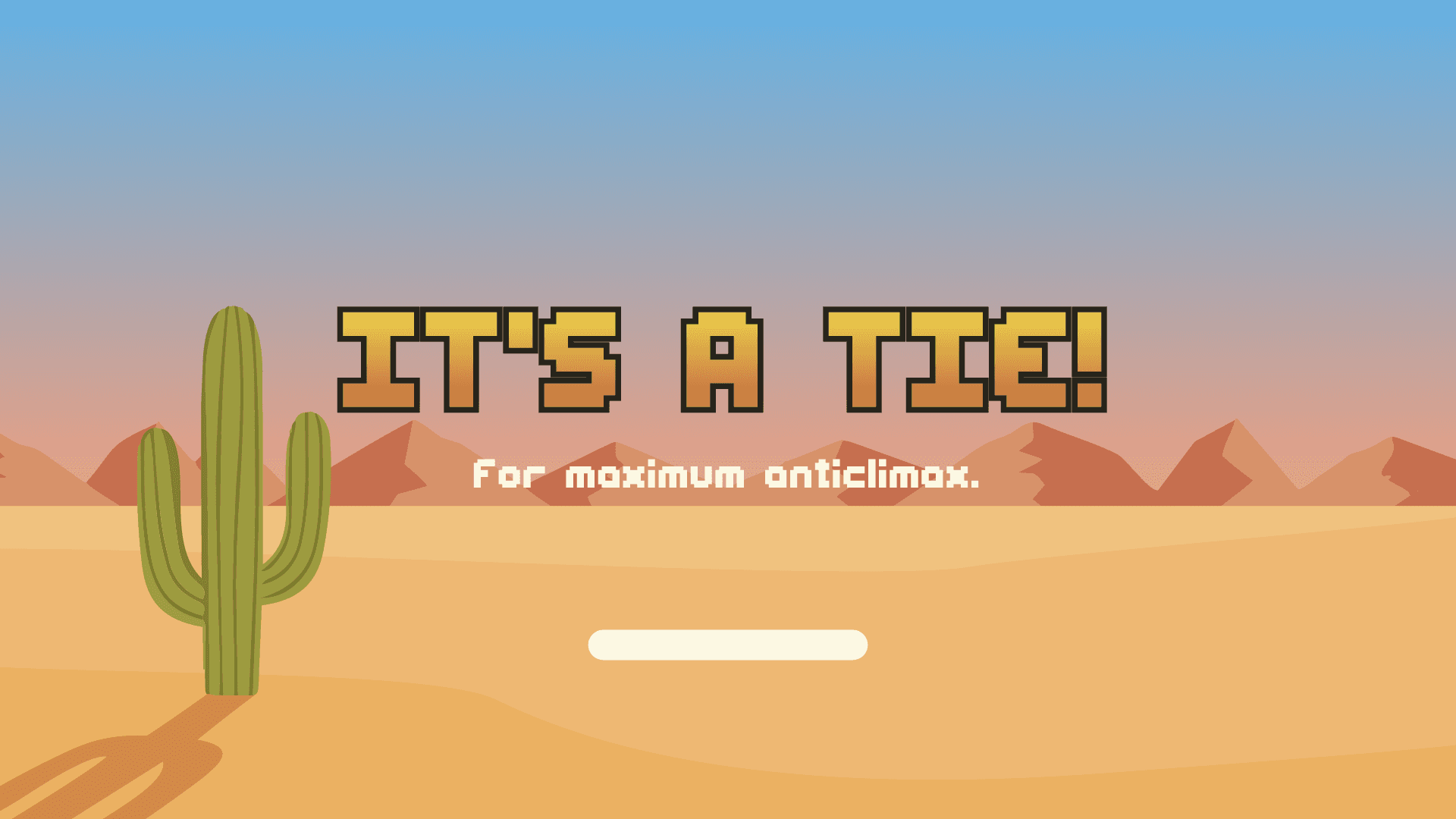
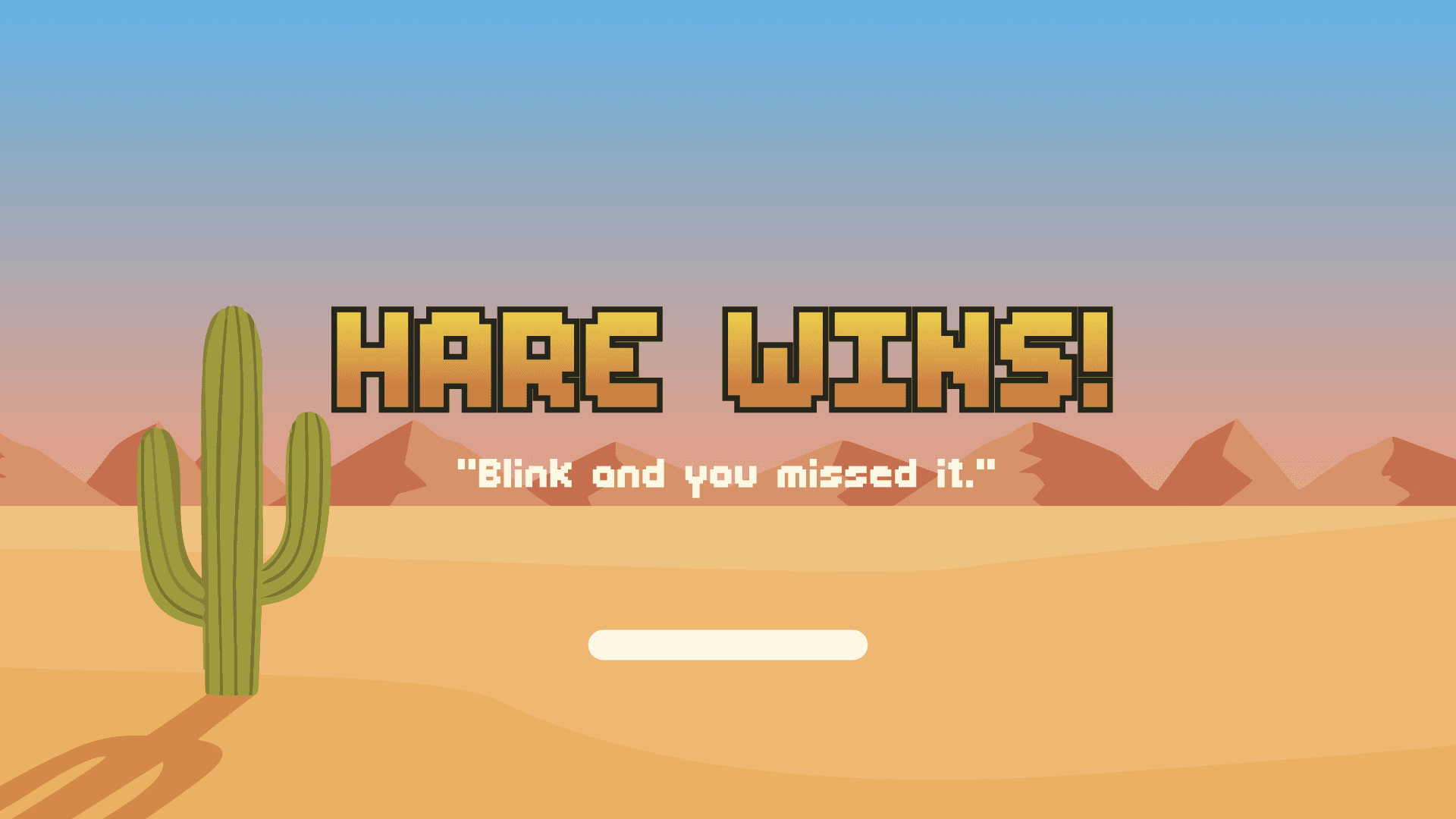
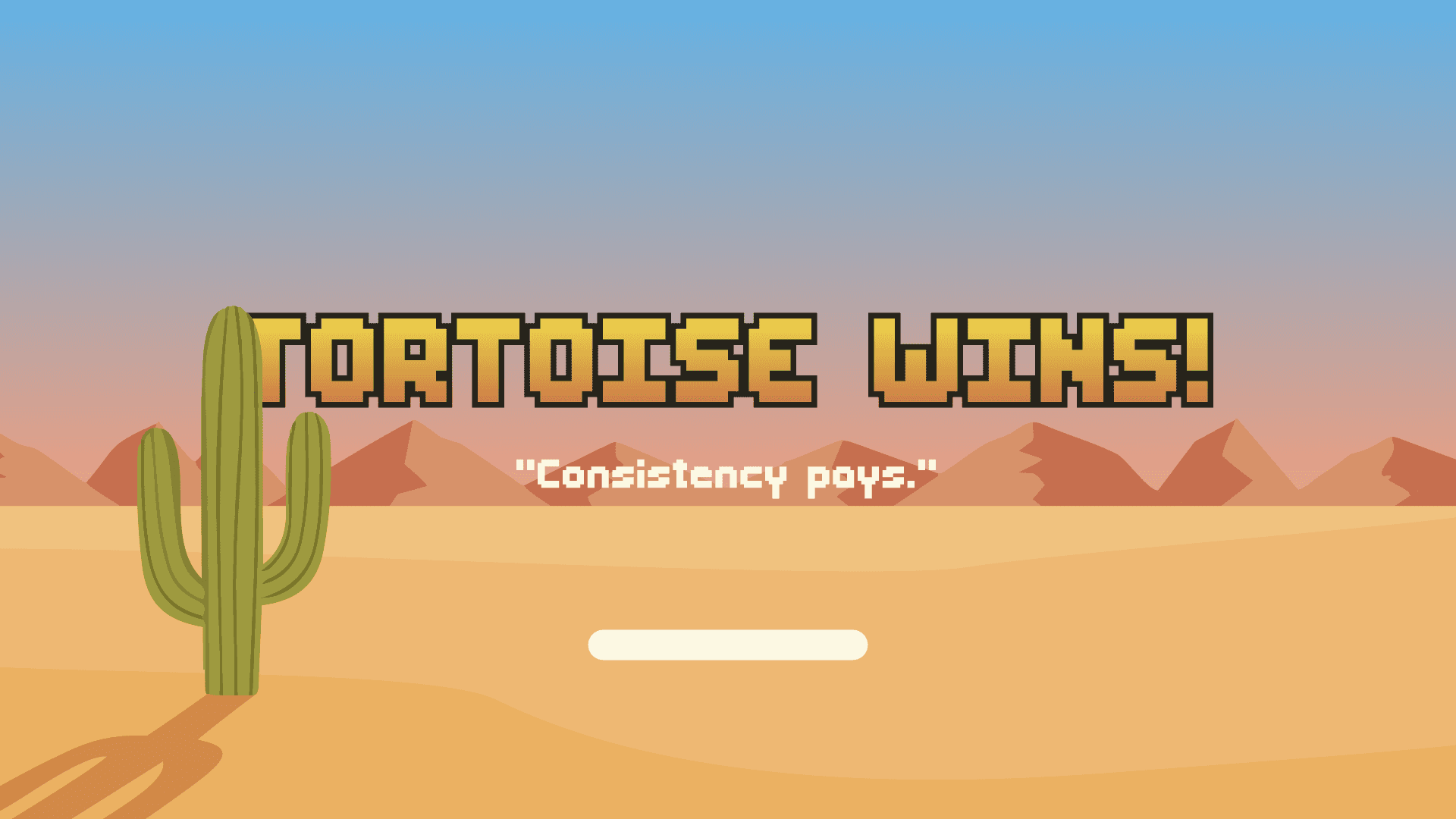
The player boosts their character with a simple hover input, while the opponent follows a reactive timeline that tries its best to keep up. Hold a decent pace for 10 seconds and land one final click to win. Easy… at least for the Hare.
The focus here was expressive character animation, clean rigs, simple-but-solid interaction logic, and a smooth three-screen flow supported by consistent visuals.
Year
2025
Services
Interactive Prototyping, Motion Design, State Machine Logic, Character Rigging & Animation
Client
Personal Project
Intro
A fully functional, three-screen racing micro-game built in Rive. The piece uses a compact but efficient State Machine to handle user interaction, timing, character states, and screen transitions.
Process
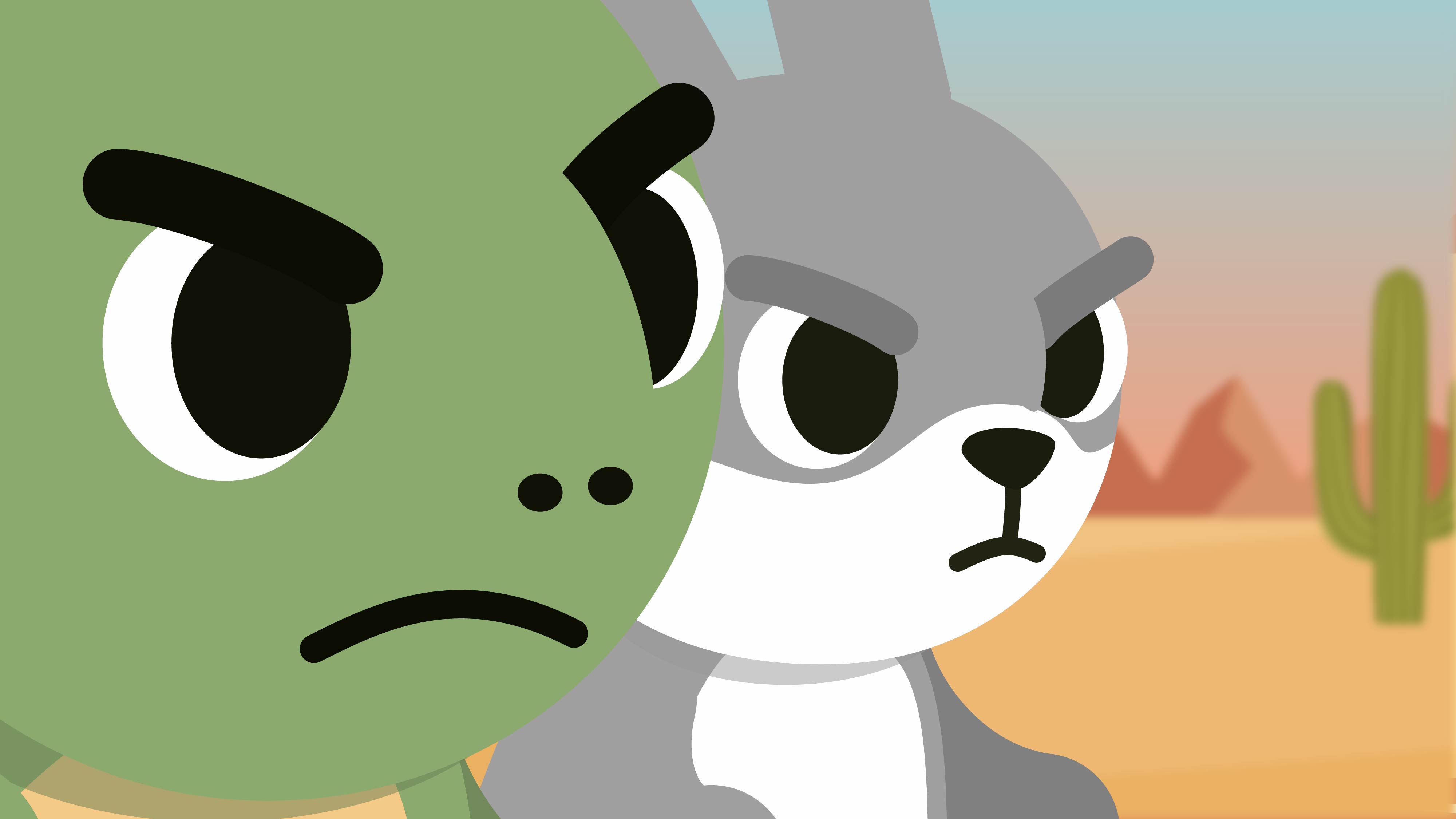
To bring these two classic rivals to life, I focused on expressive acting and flexible rigs. Plenty of squash & stretch for the sprint moments, plus subtle face changes reacting to who’s leading. The personalities are pretty clear: the Hare runs like he woke up from a nap, and the Tortoise… well, he’s giving it everything he’s got.
The entire experience runs on one unified State Machine — a single structure that keeps everything organized and predictable instead of turning into a bowl of spaghetti. This SM handles the transitions between the three screens (Intro, Gameplay, Outcome), determines the race result based on timing and player performance, controls all character state changes from idle to sprint to celebration (or defeat), and also drives the background and UI animations to match the rhythm of the race. It even manages the opponent’s reactive timeline to keep the run dynamic. Everything lives inside this one system, making the logic clean, stable, and easy to iterate.
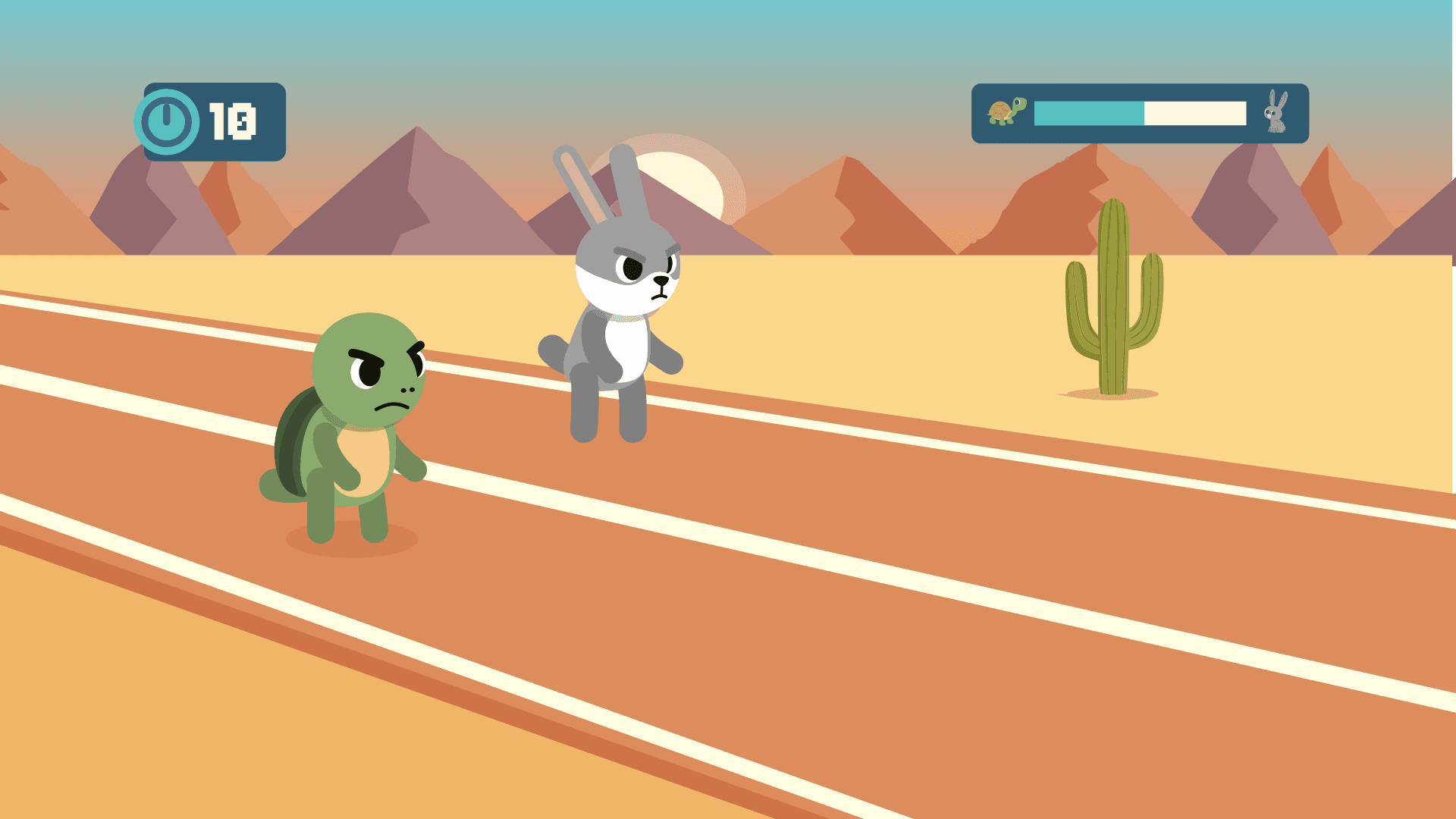
All vector assets — characters, backgrounds, and UI — were designed from scratch to maintain a consistent look across the three screens and support the micro-game’s tiny narrative arc.